
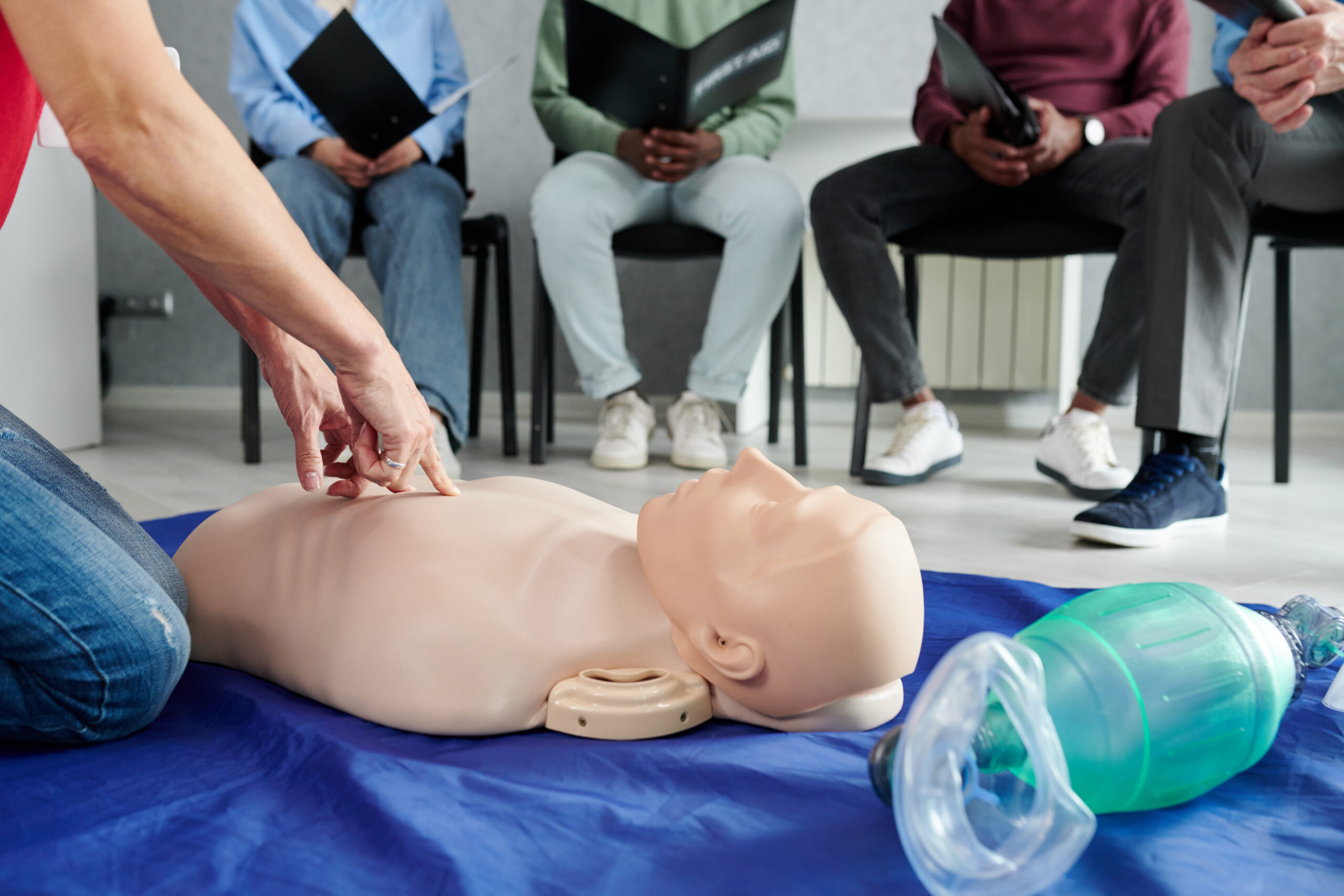
A CPR course can teach someone exactly what to do during a cardiac emergency, but learning a skill once and being able to perform it confidently months later are two very different things. When an emergency happens, there is no time to reread course material or mentally work through every step. The response has to come from knowledge that has been practiced, understood, and reinforced.
That is what makes CPR skill retention so important. For healthcare professionals especially, CPR education should not be viewed as something that ends when a course completion card is issued. The real value of training is being able to recall and perform those skills when a patient needs them.
At Nationwide Health CPR, courses are developed and taught by experienced medical professionals, and the training center offers BLS, ACLS, PALS, and instructor education. As an American Heart Association Training Center, Nationwide Health CPR emphasizes current life-saving training methods and continues updating its courses to meet the needs of healthcare professionals and the community.
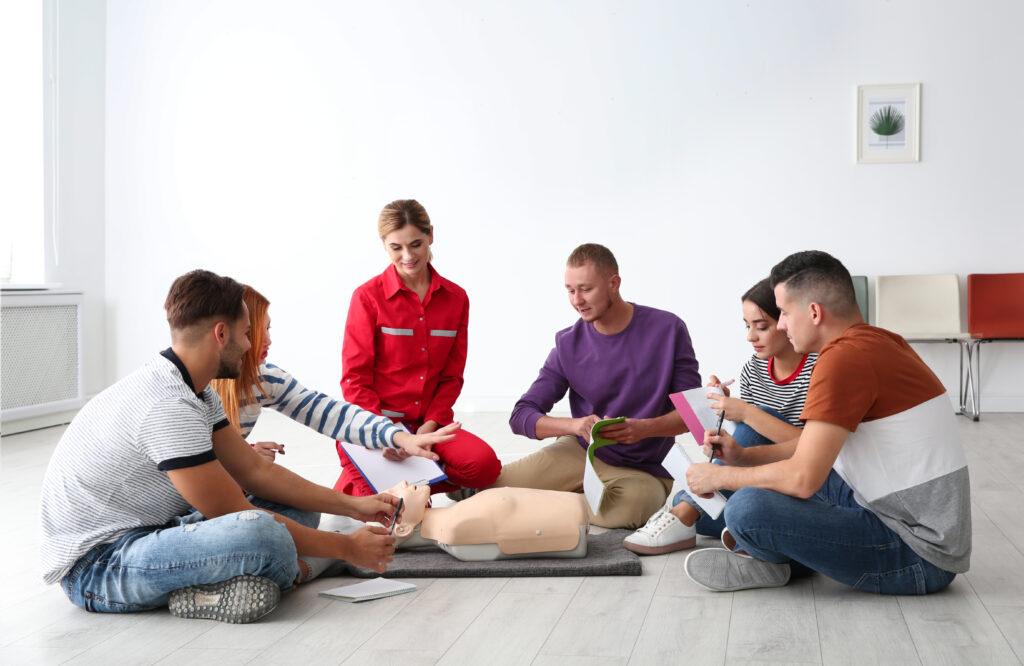
There is a major difference between understanding CPR intellectually and performing it correctly under pressure. A student may be able to explain chest compressions, recognize when CPR is required, and answer questions correctly during class. Performing those same skills during an unexpected emergency requires another level of preparation.
CPR skill retention develops when learners have opportunities to convert information into physical action. This is one reason practical training matters. Performing compressions, responding to simulated emergencies, working with equipment, receiving feedback, and repeating skills gives learners an experience they can draw from later.
Current American Heart Association resuscitation education guidance supports this emphasis on continued practice. The AHA recommends booster sessions when resuscitation training is delivered primarily as a concentrated training event and considers spaced learning a reasonable alternative. Research reviewed for the guidelines found benefits from CPR booster sessions conducted at intervals ranging from one to six months.
For a healthcare provider, the lesson is straightforward. Completing a course establishes an important foundation, but maintaining readiness requires continued attention to the skills learned in that course.
CPR is different from a task healthcare professionals perform every day. Depending on a provider’s position and work environment, months may pass without performing CPR during an actual cardiac arrest. A skill that is rarely used can become less automatic over time.
The American Heart Association has specifically identified skill decay as an issue in resuscitation education. Its education science materials note that skills can decline after standardized resuscitation courses and that deliberate practice, mastery learning, booster training, and spaced learning can help improve CPR skill retention.
This does not mean the original training was ineffective. It reflects how people learn complex physical skills.
Think about what CPR demands from a responder. The person must recognize the emergency, begin the appropriate response, maintain effective compressions, coordinate with other responders, use available equipment, and continually reassess what is happening. In a healthcare environment, that response may also need to fit into a much larger resuscitation effort.
Knowledge provides the framework. Practice helps make the response usable.
Watching someone demonstrate CPR can help a student understand the sequence. Performing CPR creates a different learning experience.
During hands-on training, students discover what proper positioning feels like. They learn how physically demanding continuous compressions can become. They practice transitioning between responsibilities and responding when a scenario changes. Just as importantly, an instructor can identify problems that a student may not recognize independently.
That immediate feedback matters for CPR skill retention.
The American Heart Association’s current education guidance reports that CPR feedback devices used during training can improve several CPR quality measures, including compression depth, rate, and recoil compliance. The broader lesson is that learners benefit when practice includes meaningful information about how well they are actually performing a skill.
Nationwide Health CPR’s course offerings reflect this practical approach to resuscitation education. Its BLS and ACLS renewal combination course, for example, is instructor led and covers early and continuous high quality CPR, prevention of cardiac arrest, high performance teams, recognition and intervention of cardiopulmonary arrest, systems of care, post cardiac arrest care, acute dysrhythmias, stroke, and acute coronary syndromes.
Healthcare professionals can review available dates and course options through the Nationwide Health CPR training calendar.
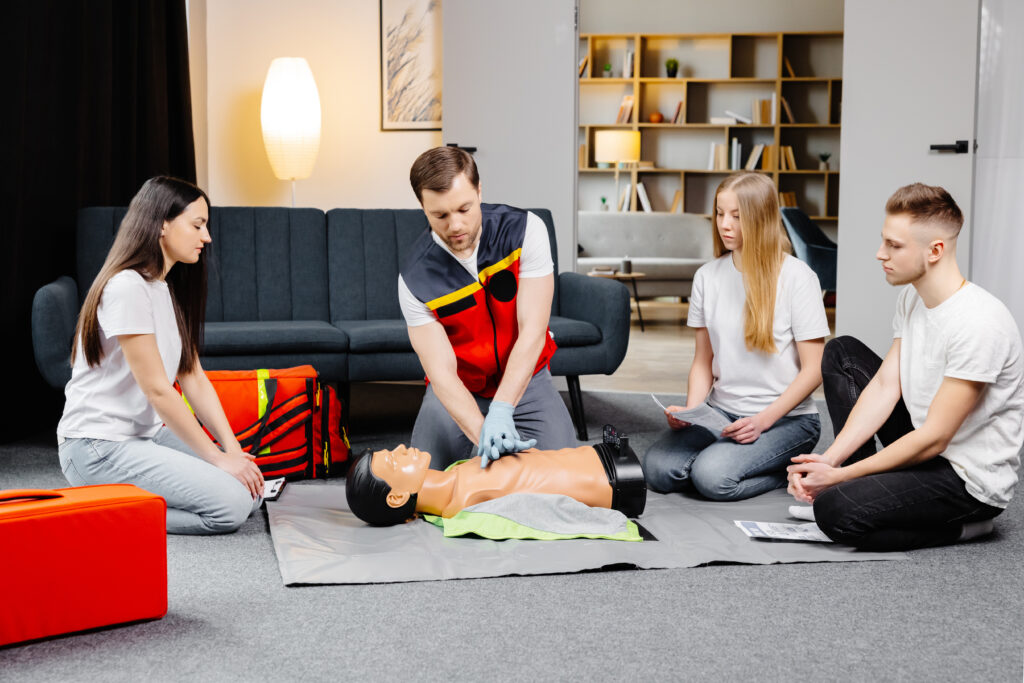
Basic Life Support provides the foundation for effective resuscitation. Even when advanced interventions become necessary, the quality of fundamental life support skills continues to matter.
Nationwide Health CPR offers BLS training geared toward providers including EMTs, paramedics, firefighters, and hospital based healthcare professionals. Successful students receive a course completion card that is valid for two years.
That two year course completion period should not be confused with a guarantee that every physical skill will remain equally sharp for two years without reinforcement. This distinction is central to CPR skill retention.
The current American Heart Association Resuscitation Education Science guidelines describe traditional resuscitation education as often consisting of a concentrated course followed by retraining one or two years later. The guidelines also discuss spaced learning and shorter booster sessions as strategies for reinforcing previously learned material.
For healthcare organizations, that creates an important question. Instead of asking only whether employees have current credentials, it may also be worth asking whether they remain confident and capable of performing the skills behind those credentials.
The importance of CPR skill retention becomes even clearer as providers progress into Advanced Cardiovascular Life Support.
ACLS requires healthcare professionals to bring multiple abilities together during a rapidly developing emergency. Nationwide Health CPR’s ACLS education is geared toward healthcare providers who respond to emergencies, including personnel working in emergency response, emergency medicine, intensive care, and critical care settings.
The BLS and ACLS combination training offered through Nationwide Health CPR addresses cardiac arrest prevention, high-performance teams, high-quality CPR, recognition of cardiopulmonary arrest, post cardiac arrest care, acute dysrhythmias, stroke, and acute coronary syndromes.
This type of training demonstrates why retaining isolated facts is not enough. During a real emergency, providers must recognize what is happening and connect assessment, communication, resuscitation skills, and clinical decision-making.
A provider may know an algorithm on paper yet still benefit enormously from practicing how that algorithm unfolds when other people are performing different roles around the patient.
CPR skill retention is often discussed as though it only concerns chest compression technique. In healthcare settings, effective resuscitation also depends heavily on the team.
A cardiac arrest can bring several professionals to the bedside within moments. Someone may begin compressions while another manages ventilation. Other team members may prepare equipment, monitor the patient, communicate information, or assume leadership.
These responsibilities need coordination.
The American Heart Association’s resuscitation education guidance specifically addresses teamwork and leadership training as part of effective resuscitation education. It also recognizes simulation as an important educational strategy and states that simulation conducted in the actual clinical environment can reasonably supplement traditional resuscitation training.
Team practice allows healthcare professionals to work through communication challenges before those challenges occur during an actual emergency. It allows participants to practice listening, assigning responsibilities, communicating clearly, and maintaining awareness of the overall resuscitation.
Those skills can be difficult to develop through reading alone.
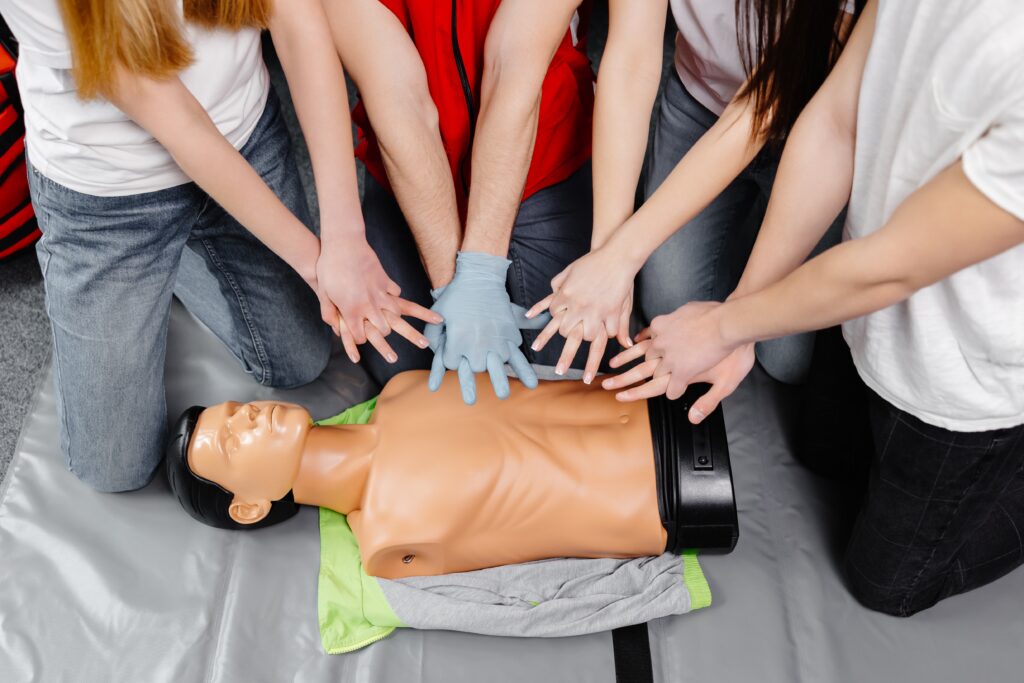
Maintaining CPR skills does not necessarily mean repeatedly completing an entire certification course.
One of the most useful developments in resuscitation education is the growing recognition that shorter reinforcement sessions can have value. The AHA’s 2025 education guidelines reviewed studies in which booster CPR training occurred at intervals between one and six months. Some studies found improvements in CPR performance, compression quality, ventilation quality, and time to critical interventions.
That makes skill reinforcement practical for healthcare organizations.
A short practice session can provide an opportunity to revisit compression technique. Another session might focus on team communication. Providers could practice recognizing a deteriorating patient or moving quickly from assessment to intervention.
The goal is not simply repetition for its own sake. Good reinforcement targets skills that matter and gives participants meaningful feedback.
This is consistent with the AHA’s broader approach to resuscitation education, which recognizes deliberate practice and mastery learning as strategies that can improve the acquisition and retention of important resuscitation skills.
A skilled instructor does much more than deliver course material. Instructors observe performance, identify weaknesses, provide feedback, and help learners understand why a correction matters.
Nationwide Health CPR also prepares professionals to become instructors in BLS, ACLS, and PALS. Its BLS Instructor Course, for example, includes using AHA instructor materials, helping students meet learning objectives, developing coaching skills, conducting objective skills performance evaluations, and providing effective feedback and remediation.
Those instructor responsibilities directly support better learning. A student who receives specific feedback about a skill has an opportunity to correct it immediately rather than repeatedly practicing an error.
Healthcare professionals interested in moving from provider education into teaching can explore Nationwide Health CPR instructor courses and review current training opportunities.
A course completion card matters. Employers need documentation, healthcare professionals need to satisfy training requirements, and standardized courses provide an essential structure for resuscitation education.
But the card itself cannot perform CPR.
The larger purpose of training is readiness. Can a provider recognize the emergency? Can that person begin the appropriate response without unnecessary hesitation? Can the provider perform the physical skills correctly and communicate effectively with a team?
Those questions are ultimately more important than the date printed on a certification card.
Recent work from the American Heart Association and the International Liaison Committee on Resuscitation also reflects this broader focus. A 2026 consensus framework for resuscitation education emphasizes outcomes including knowledge, skill retention, team performance, instructor outcomes, and ultimately patient and system outcomes.
CPR skill retention therefore deserves to be treated as part of patient readiness, not simply as an educational concern.
For healthcare professionals who want to maintain their skills, renew a certification, or advance into a higher level of resuscitation training, Nationwide Health CPR provides BLS, ACLS, PALS, combination courses, and instructor education at its Pompano Beach training center. Its current course calendar includes provider training, renewal opportunities, and instructor courses designed for healthcare professionals at different stages of their careers.
You can review available classes through the Nationwide Health CPR upcoming training schedule or contact Nationwide Health CPR for help determining which course fits your training needs.
CPR training gives healthcare professionals essential knowledge, but readiness is built through what happens after the initial learning experience. Skills that are practiced, evaluated, corrected, and revisited have a better opportunity to remain available when an emergency demands them.
That is why CPR skill retention deserves attention from individual providers, instructors, and healthcare organizations alike. Training should create more than short term competence. It should help build responders who can recognize an emergency, communicate effectively, and put their skills into action when another person’s life depends on it.
For Nationwide Health CPR, that mission extends across BLS, ACLS, PALS, renewal, and instructor education. For the healthcare professional taking the course, the goal is even simpler: do not just learn the skill, stay ready to use it.