

A medical emergency can develop in any healthcare setting, often without warning. A patient visiting a physician for a routine appointment may suddenly experience breathing difficulties. Someone recovering from a procedure may become unresponsive. A patient who appeared stable only minutes earlier may develop signs of a serious cardiovascular emergency. In these situations, the ability of healthcare professionals to recognize a problem and respond together can significantly influence the quality and timeliness of care.
Medical Emergency Training provides healthcare teams with the knowledge, practical skills, and structured preparation needed to respond when routine patient care suddenly becomes urgent. While individual clinical experience remains important, an effective emergency response requires more than one knowledgeable provider. It depends on communication, clearly understood responsibilities, familiarity with emergency equipment, and the ability to coordinate actions under pressure.
Healthcare organizations that prioritize emergency preparedness recognize that training is not simply a requirement to satisfy during employee onboarding. It is an ongoing responsibility that supports patient safety, professional development, and stronger teamwork.
Through educational programs available at Nationwide Health CPR, healthcare professionals can explore training opportunities in Basic Life Support, Advanced Cardiovascular Life Support, Pediatric Advanced Life Support, and instructor education. These programs help establish important foundations for recognizing emergencies, practicing essential interventions, and improving team readiness.
Medical emergencies are not limited to emergency departments or intensive care units. They can occur in outpatient clinics, dental offices, rehabilitation centers, surgical facilities, diagnostic centers, long term care environments, and physician practices.
Each healthcare environment presents different challenges. A hospital emergency department may have immediate access to specialized personnel and advanced equipment, while a smaller outpatient facility may have fewer staff members and limited emergency resources. Regardless of the setting, healthcare professionals need to understand their responsibilities and how to activate an appropriate response.
Consider a patient who becomes unresponsive during a routine office visit. One staff member may recognize the emergency and assess responsiveness and breathing. Another may contact emergency medical services or activate the facility’s emergency response procedure. Additional personnel may retrieve an automated external defibrillator, prepare emergency equipment, or assist with resuscitation according to their training.
Without an established response plan, these actions may become disorganized. Staff members might assume someone else has contacted emergency services, or multiple people may attempt the same task while another essential responsibility remains unattended.
Medical Emergency Training helps organizations address these challenges by developing practical response skills and reinforcing the importance of coordinated action.
The American Heart Association CPR and Emergency Cardiovascular Care Guidelines provide an important scientific foundation for resuscitation education and emergency cardiovascular care. Healthcare facilities can use current evidence based guidance to support appropriate training policies and emergency response procedures.

An organization cannot develop a strong emergency response culture through certification requirements alone. Preparedness must become part of how the healthcare team approaches patient safety.
Leadership plays an important role in establishing that expectation. When managers, clinical directors, and experienced healthcare professionals consistently emphasize emergency readiness, employees are more likely to recognize its importance.
This begins with understanding the risks associated with the facility’s patient population and services. A pediatric practice may need to place particular emphasis on emergencies involving infants and children. A cardiology practice may prioritize cardiovascular assessment and resuscitation readiness. A surgical or procedural facility may need specific emergency protocols related to sedation, airway management, and patient deterioration.
These differences influence the types of training staff members require.
A meaningful preparedness culture also creates opportunities for employees to ask questions, identify gaps, and participate in realistic practice without fear of embarrassment. Training should help individuals recognize what they know, where they need improvement, and how their responsibilities fit into the larger team.
Healthcare professionals seeking to strengthen their emergency response education can review the training opportunities offered by Nationwide Health CPR and identify programs appropriate to their professional responsibilities.
Basic Life Support is one of the most important foundations of Medical Emergency Training because it addresses essential actions during cardiac arrest and other life-threatening emergencies.
BLS education focuses on recognizing cardiac arrest, activating the appropriate emergency response, performing high-quality CPR, using an automated external defibrillator, and coordinating essential life support actions.
These skills are relevant across many healthcare environments. Nurses, medical assistants, physicians, respiratory therapists, emergency medical technicians, and other healthcare personnel may be expected to participate in an emergency response according to their roles and qualifications.
An important part of BLS training is understanding that effective CPR involves more than remembering the correct sequence of actions. Providers must also recognize abnormal breathing, minimize unnecessary interruptions in compressions, use available equipment appropriately, and communicate clearly with other responders.
Practical instruction provides opportunities to develop these skills through demonstrations, supervised practice, and performance feedback.
For healthcare teams, BLS education creates a common foundation. When employees have received appropriate training and understand established response procedures, they are better positioned to work together during a critical event.
While BLS establishes essential resuscitation skills, Advanced Cardiovascular Life Support expands the clinical knowledge and coordinated interventions used by appropriately trained healthcare professionals during cardiovascular emergencies.
ACLS education addresses the recognition and management of cardiac arrest, serious cardiac rhythm disturbances, and other cardiovascular emergencies. It also emphasizes high quality CPR, structured clinical assessment, treatment algorithms, and effective resuscitation team dynamics.
One of the most valuable aspects of ACLS education is learning how individual clinical responsibilities connect during a coordinated response.
A team leader may need to interpret changing information, assign responsibilities, monitor the progress of interventions, and communicate treatment priorities. Other providers may be responsible for compressions, airway support, monitoring, medication preparation or administration within their scope of practice, and documenting events.
These responsibilities require both technical knowledge and effective teamwork.
Nationwide Health CPR offers ACLS Instructor Course training for qualified healthcare professionals interested in developing the ability to teach advanced cardiovascular resuscitation concepts. Instructor education also reinforces the importance of structured demonstrations, clinical scenarios, and effective communication during training.
The American Heart Association ACLS education resources provide additional information about the clinical knowledge and team-based approach incorporated into advanced cardiovascular life support education.
Medical Emergency Training must also account for the differences between adult and pediatric patients. Children are not simply smaller adults, and emergencies involving infants and children often require different assessment priorities and clinical considerations.
Pediatric Advanced Life Support education is intended for healthcare professionals who may respond to serious pediatric emergencies. Training emphasizes the recognition of respiratory compromise, shock, and cardiac emergencies, along with the coordinated response required when a child’s condition deteriorates.
In pediatric care, recognizing subtle changes can be especially important. Children may initially maintain blood pressure despite developing circulatory problems, making other assessment findings essential for recognizing deterioration. Healthcare providers need to consider breathing, circulation, mental status, and other clinical findings together rather than relying on a single measurement.
For teams working in pediatric offices, emergency departments, urgent care facilities, or environments where children may receive treatment, appropriate PALS education can strengthen preparedness.
Nationwide Health CPR includes PALS provider and renewal training among its course offerings. Healthcare professionals can explore the Nationwide Health CPR course calendar to review available training opportunities and determine which courses are relevant to their responsibilities.
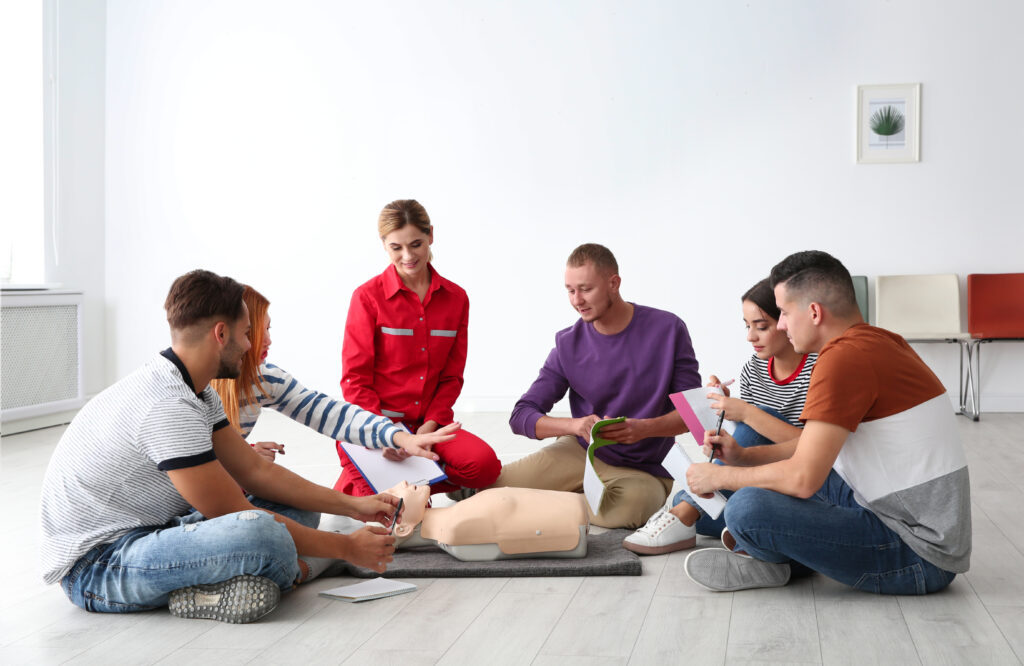
A healthcare professional may understand a clinical procedure perfectly when practicing independently but encounter new challenges when several people must coordinate their actions during an emergency.
Realistic scenarios help expose these challenges.
Imagine a simulated cardiac arrest in a busy outpatient clinic. One provider begins CPR while another retrieves the AED. A third staff member contacts emergency services, and someone else assists with patient access and communication. The team must work within the actual limitations of its clinical environment.
During the exercise, participants may discover that emergency supplies are difficult to locate, equipment placement creates unnecessary delays, or staff members are uncertain about their assigned responsibilities.
These discoveries are valuable because they identify opportunities for improvement before an actual patient emergency occurs.
The American Heart Association’s 2025 Resuscitation Education Science Guidelines support the use of simulation and team training in resuscitation education. They also recognize the potential value of conducting simulations within actual clinical environments to strengthen communication, leadership, role allocation, and situational awareness.
For healthcare organizations, simulation should be viewed as an opportunity to evaluate the entire emergency response process, not merely the technical performance of individual employees.
Clear communication is one of the most important components of emergency preparedness.
During a medical emergency, instructions must be understood quickly. Staff members need to communicate assessment findings, confirm responsibilities, and report changes in the patient’s condition without creating unnecessary confusion.
One useful communication method is closed-loop communication. When a team leader assigns a task, the person receiving the instruction acknowledges it and reports when the task is completed. This helps reduce uncertainty about whether important actions have been performed.
Effective communication also requires an environment where team members feel comfortable speaking up when they recognize a concern. A nurse, medical assistant, or respiratory therapist may notice information that is important to the overall response.
The 2025 American Heart Association guidelines recommend that life support training for healthcare professionals place specific emphasis on teamwork competencies. Research reviewed for those recommendations found improvements in measures such as communication, leadership behaviors, and overall teamwork following dedicated team training.
Medical Emergency Training should therefore develop both clinical knowledge and the communication skills necessary to use that knowledge effectively.
Healthcare facilities may have AEDs, oxygen delivery equipment, emergency medications, first aid supplies, and other resources appropriate to their services.
However, purchasing emergency equipment does not automatically create emergency readiness.
Staff members should know where equipment is located, which personnel are authorized and trained to use it, and how the organization maintains and checks essential supplies.
An AED located in a hallway is less useful if employees are unsure where to find it. Emergency equipment stored in an unfamiliar cabinet can create unnecessary delays. A team may also discover during a drill that certain supplies are missing or that staff members need additional instruction.
Organizations should establish procedures for inspecting equipment, monitoring expiration dates, documenting maintenance, and ensuring that staff understand the resources available within their facility.
At Nationwide Health CPR, the available educational programs include CPR, AED, first aid, and advanced life support training. These offerings can support organizations seeking to strengthen the practical skills associated with their emergency response equipment.
Cardiac arrest is an important focus of healthcare emergency education, but it is not the only situation that requires immediate intervention.
Serious traumatic bleeding can also create an immediate threat to life. Healthcare facilities and workplace response teams may benefit from understanding how to recognize severe bleeding and begin appropriate bleeding control measures while additional medical assistance is obtained.
Stop the Bleed education addresses techniques such as direct pressure, wound packing, and tourniquet application.
These skills complement CPR and AED education by preparing participants for a different category of emergency.
Nationwide Health CPR offers a combined BLS CPR and Stop the Bleed course designed for healthcare professionals, first responders, public safety personnel, workplace responders, and others interested in practical emergency preparedness.
Organizations developing broader emergency response programs should consider the types of emergencies that may reasonably occur in their environment and select training that addresses those risks.
Completing an initial certification course is an important achievement, but healthcare organizations should not assume that a current course completion card automatically means every employee remains equally confident in every emergency skill.
Some healthcare professionals participate in emergency responses frequently. Others may go months or years without performing certain resuscitation procedures.
This difference in experience can influence how comfortable individuals feel when responding to an unexpected event.
The American Heart Association’s 2025 education guidelines recommend booster sessions when resuscitation education is delivered primarily through concentrated training events. The guidelines also recognize spaced learning as a reasonable alternative educational approach.
cpr.heart.org
Healthcare organizations can apply these principles by incorporating appropriate refresher activities, practical exercises, and opportunities to review emergency procedures between formal certification courses.
Nationwide Health CPR provides BLS and ACLS renewal combination training covering important topics such as high-quality CPR, cardiac arrest recognition, cardiovascular emergencies, and effective resuscitation teams.
A consistent approach to continuing education can help healthcare facilities maintain readiness as employees change positions, new staff members join the organization, and clinical practices evolve.
Some healthcare organizations may benefit from having qualified instructors within their teams.
Internal instructors can contribute to a stronger training culture by helping coordinate education, supporting skills development, and encouraging staff members to take an active interest in emergency preparedness.
However, clinical experience alone does not automatically qualify someone to teach an American Heart Association certification course. Instructor candidates must satisfy the applicable requirements and complete the appropriate instructor development process.
Nationwide Health CPR offers BLS and ACLS instructor education designed to help qualified candidates develop teaching skills, use official AHA instructional materials, evaluate student performance, and provide constructive coaching.
Professionals interested in these opportunities can explore the Nationwide Health CPR instructor course schedule.
Investing in instructor development can support a broader organizational commitment to education, particularly when combined with appropriate training oversight and ongoing quality improvement.
A facility may have excellent certification compliance and still discover problems during a realistic emergency exercise.
This is why emergency preparedness should be evaluated through more than employee training records.
Healthcare leaders can examine how quickly staff recognize simulated emergencies, whether appropriate assistance is activated, how effectively team members communicate, and whether essential equipment can be accessed without confusion.
The organization should also consider whether employees understand their roles and whether emergency procedures remain practical during periods of reduced staffing.
After an exercise, a structured discussion can help participants identify what worked well and what should change.
For example, a team may recognize that its emergency equipment is appropriately stocked but stored too far from certain patient care areas. Another facility may discover that employees need clearer instructions about who contacts emergency medical services.
These observations can inform meaningful improvements.
The goal is not to criticize individual employees. It is to understand how the organization functions under pressure and identify ways to strengthen the response.
An effective training plan should reflect the actual needs of the healthcare organization.
A small outpatient practice may require a different approach from a hospital critical care department. A pediatric facility may prioritize different clinical scenarios from a rehabilitation center or dental office.
Healthcare leaders should begin by identifying the emergencies most relevant to their patients and services. They should then determine which employees require BLS, ACLS, PALS, first aid, or other training based on their roles, professional responsibilities, employer policies, and applicable requirements.
Training plans should also account for new employees, staff turnover, credential renewal, emergency equipment orientation, and practical response exercises.
The strongest programs connect these elements into a consistent process.
A new employee should understand the facility’s emergency procedures during orientation. Experienced employees should have opportunities to refresh important skills. Supervisors should know how to identify training gaps, and the organization should periodically evaluate how effectively its emergency response plan works.
Medical Emergency Training becomes much more meaningful when it is connected to daily clinical operations rather than treated as an isolated administrative requirement.
Healthcare organizations looking to improve emergency readiness can benefit from selecting training programs that reflect the responsibilities of their staff.
Nationwide Health CPR offers educational opportunities in BLS, ACLS, PALS, CPR, first aid, and instructor development. Its programs provide options for healthcare professionals who need foundational life support education, advanced clinical training, certification renewal, or preparation to teach others.
Whether your organization operates a medical office, outpatient clinic, rehabilitation center, or another healthcare facility, choosing appropriate training is an important part of building a safer and more prepared environment.
Visit the Nationwide Health CPR website to explore available programs, or contact Nationwide Health CPR to discuss course options and identify training opportunities appropriate for your healthcare team.

Healthcare emergencies rarely provide advance notice. A routine appointment can become a critical event, and an apparently stable patient may suddenly require immediate intervention.
The quality of a healthcare team’s response depends on more than individual knowledge. It requires practical skills, communication, coordination, familiarity with equipment, and an organizational commitment to continued learning.
Medical Emergency Training brings these elements together by helping healthcare professionals prepare for the unexpected while developing a shared understanding of their responsibilities.
BLS establishes essential resuscitation skills. ACLS supports advanced cardiovascular emergency care. PALS addresses the distinct needs of pediatric patients. Additional education in bleeding control, first aid, and instructor development can further strengthen an organization’s preparedness.
For healthcare facilities, the ultimate goal should extend beyond maintaining current certifications. It should be to create an environment where emergency readiness is consistently practiced, supported by leadership, and treated as an essential part of patient care.
A prepared healthcare team is not simply a group of professionals who have completed training. It is a team that understands how to work together when patients need them most.